
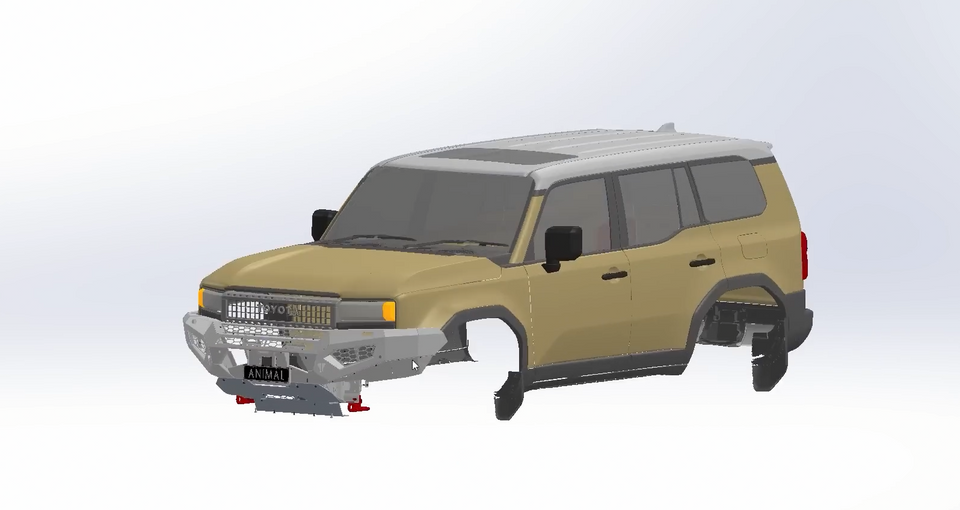
Offroad Animal's engineering team is actually something unique here in Australia. Every single one of them is a qualified mechanical engineer. Now, I'm not saying that other companies don't use qualified engineers, but a lot of them often just use people who know CAD for have just worked in the industry before. This is fine but if you actually want something properly designed we believe there is no subsitute for using a fully qualified person to do it. Kind of like getting your mate who once built a deck in his backyard to build you a house instead of a registered builder. Do it right and get the right people on the job I say.
Okay enough about that, What is the engineering process here at Offroad Animal. Well for starters we are all based in Melbourne Australia and all our design and engineering steps shown below are proudly done right here at our HQ in Mornington, Victoria.
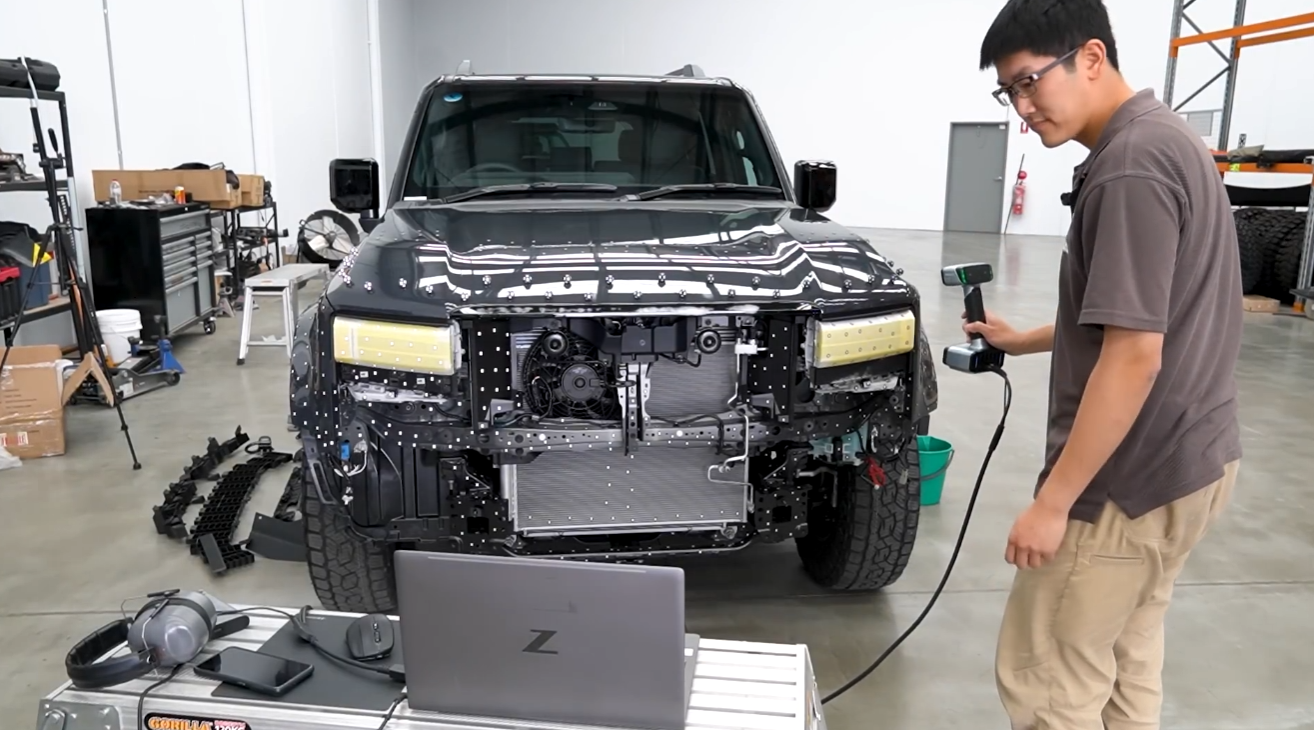
- Scan a vehicle with our 3D scanner, This allows us to precisely capture the shape and details of the vehicle to use as a refernce during the design process and make sure the products fits perfectly.
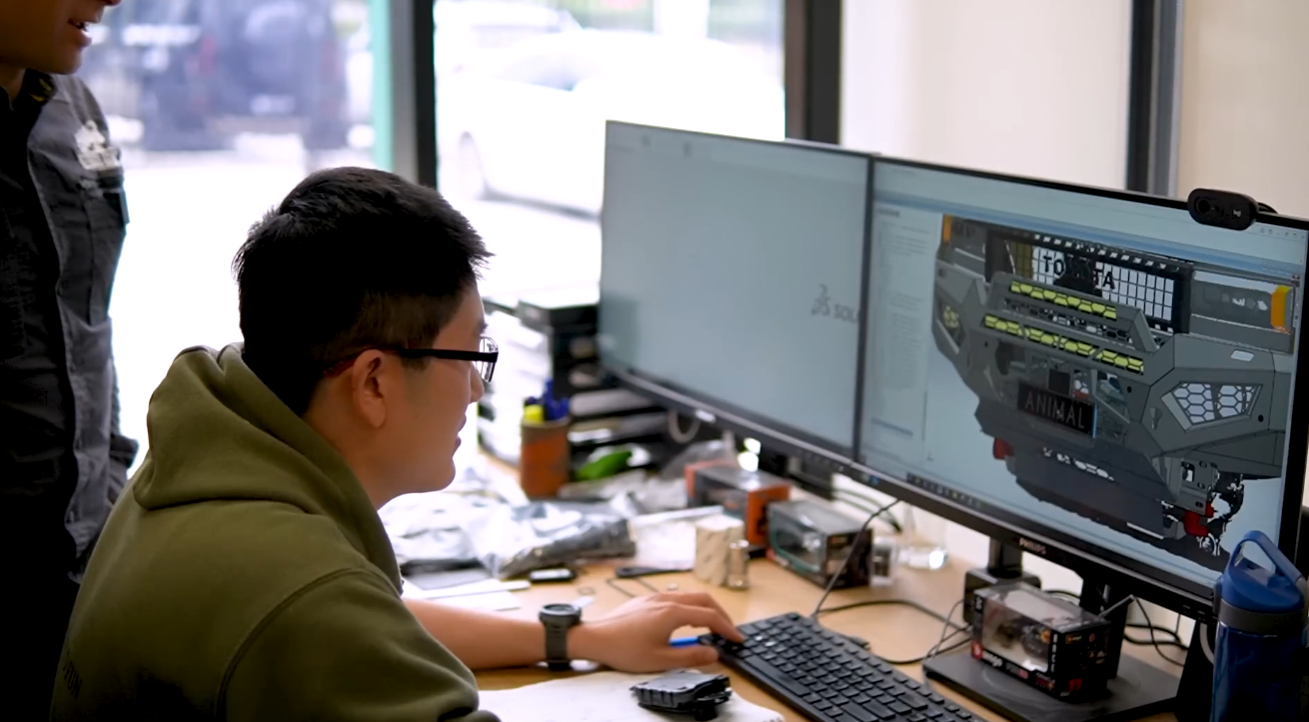
2. Load scan into our computers and begin designing with Solidworks CAD package. This is where we figure out the best way to add the strength and style the bar needs. We integrate the practical off road features, such as our front access winch mounting and hi lift jacking points all whilst keeping the myraid of functions that modern vehicles pack into their front ends. These days it's more than just parking sensors: be it radars, cross traffic sensors and active cooling systems. We also do a design compliance review to sensure the shape and features comply with all relevant regulations Including ADR13 (Lighting,) ADR 42 (General Safety Req,) ADR 43 (Dimensions,) ADR92 (External Projections,) adn AS4876.1 (Australian Standard for Frontal Protection Systems) in order to be road legal.
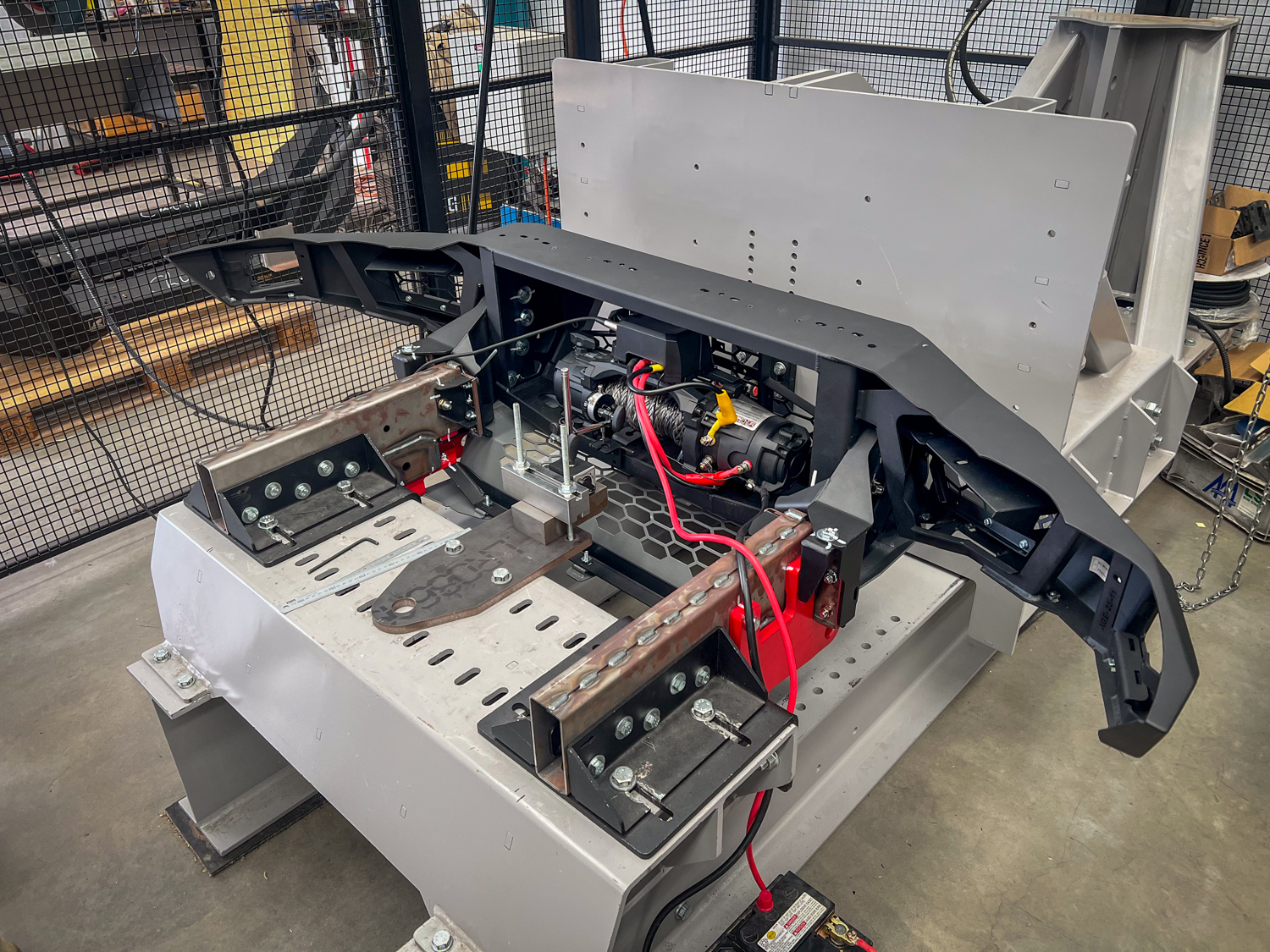
3. Build prototypes, most of the time here in Melbourne at our local manufacturing plant in Croydon Victoria.
4.Measure prototypes for dimensional compliance and Quality assurance. This allows us to identify any manufacturing issues that need to be updated or corrected.
5. Test fit product to a vehicle
6. Test drive vehicle and confirm all sensors and tech work as intended with the new product fitted.
7. Confirm notes with any changes if any required for full scale manufacturing
8. Draft Fitting instructions, which is usually an industry benchmark document that on average is 80 pages long. We sure make it easy for you to fit our products with confidence. Sometimes we even include a YouTube Video showing how to do it as well.
9. Photograph the product on the vehicle and load information on to the website
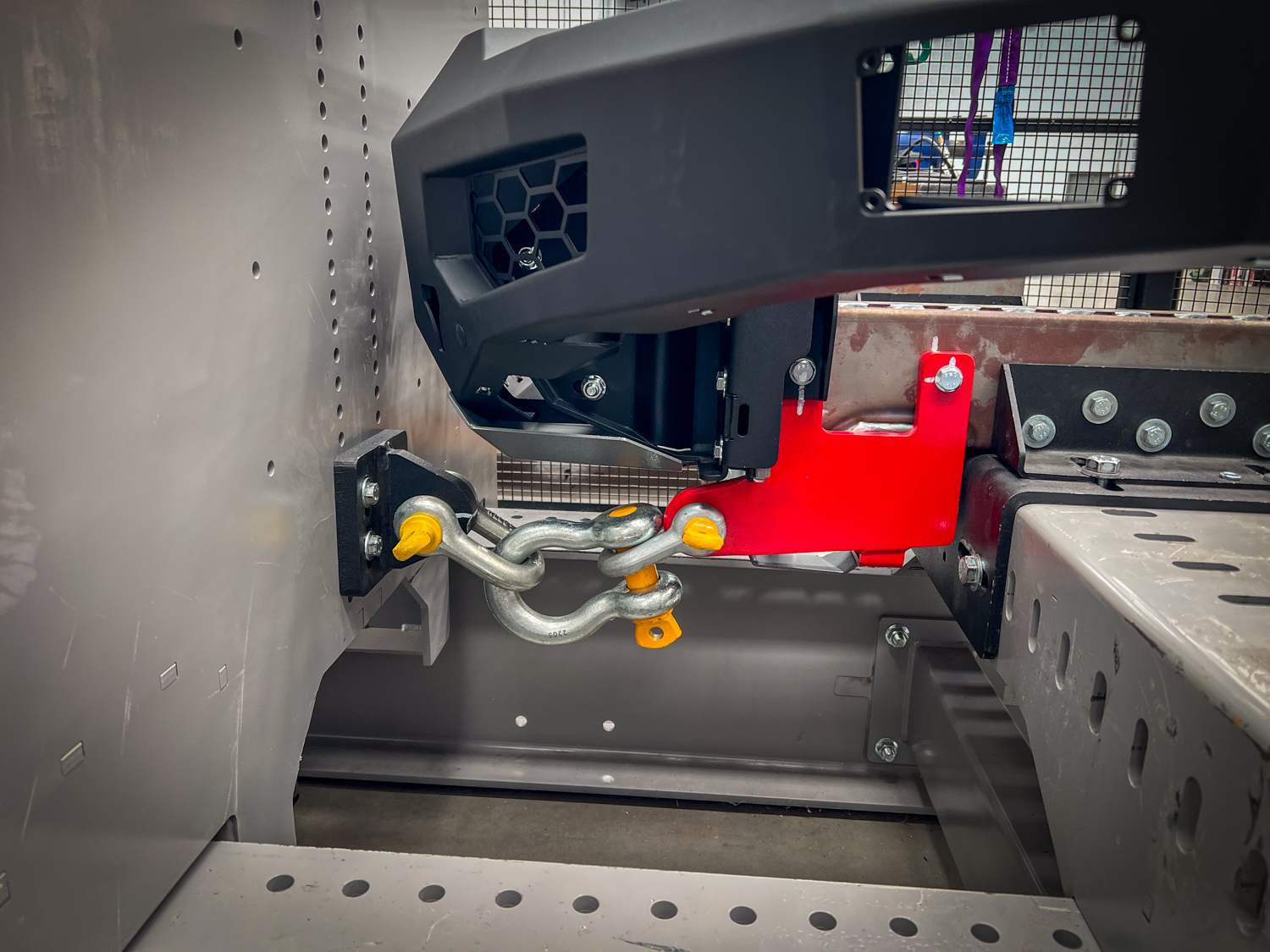
10. Crash test or physical test of the product. For example for a bull bar, we crash test the bar in our own dedicated Quasistatic test machine where we crush the bar with a 20T ram. We measure results and make changes as required.
11. Load test in our test rig the recovery points so we can rate them
12. Load test the winch cradle so we can offer a winch rating for the bull bar
13. Next we actually crash test the factory crash beam and bumper system to compare to ours for compliance
It's these steps that set us above a lot of the rest. I mean there seems to be countless bull bars available here that are just a Chinese company offering a catalog bumper (and even sometimes a counterfeit Offroad Animal one) to some importer in Australia who flogs them online super cheap. Even some of the larger bull bar companies might not design the bars in house fully and utilise contract designers overseas. There are some really good companies locally especially here in Victoria that do similar to us and design completely inhouse. Nice touch and full respect to them. They have their own style too which is great even though our styling looks better in my opinion.
Speaking on styling, Offroad Animal strives to make a bull bar that 1. Looks amazing by being modern, clean and aggressive, but 2. Actually performs how you want. We need the bull bars to work off road. That's because we actually drive off road and love heading bush and camping.
It's things like having hi-lift jacking spots in each bar, or having the ability to access the winch through the front of the bar and not have to remove the whole bar for maintenance or winch installation. Also we have a nice access hole to reach the winch clutch lever. Imagine making a winch bull bar where you can't access the free spool. Silly right, but some companies do exactly that. Now what else, yes approach angle. We always try to get the absolute best we can here as we don't want to hit rocks, trees or steps with our front end either, so we don't expect you to.
Here are all the standards and regulations we design to for bull bars: AS4876.1-2002, ADR 8/1, 42/04, 43/04, 69/00, 73/33 and soon to be ADR 98
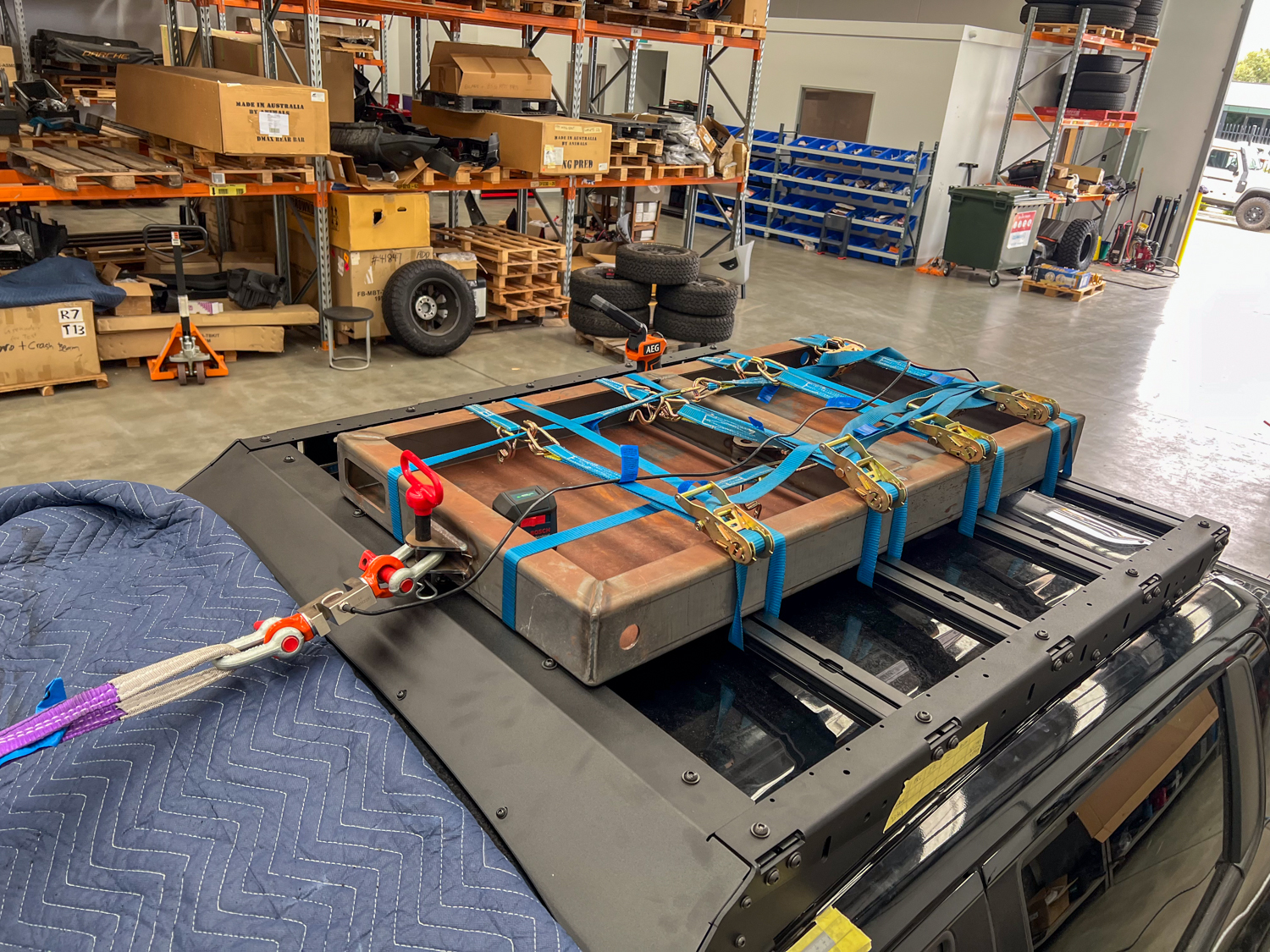
I'ts not just bull bars, we also test our roof racks much more than others do. We don't just go for a test drive, we do full Australian Standards testing to AS1235-2000. This involves not just putting heavy weights on it but pulling it forward to mimic heavy braking as well as pulling up to simulate the surf board effect, which is one of the most notorious way roof racks fail. Basically having something long like a surfboard catching the wind and ripping the rack off your roof. We load the rack to maximum capacity using special standardised load box and pull it forward, both straight and on angles to simulate heavy breacking and cornering forces. All this to ensure no dramas on your next trip
There is so much that goes in to a designing products for your 4x4, but rest assured you have qualified engineers looking after you on this with Offroad Animal
As for manufacturing, well we make hundreds of bars a month right here in Australia, but our local factory can't keep up with our demand so we also manufacture more bars in Vietnam and now Thailand too.
Here is a video we show with 4wd 24/7 showing our Prado, but also our testing rig.
Okay last up engineering introductions
- David Fitzpatrick: Bachelor Mechanical engineering 2003 Monash University:While I don't do too many designs anymore, I did start the company and came up with the first Predator and Toro bars, and still do the odd design here and there
- Chris Williams: Bachelor Mechanical Engineering 2013 Monash University: Chris is actually based in country Victoria and heads out bush a lot. He's our first full time employee after David and regularly designs Offroad Animal products and leads the testing programs
- Leon Shi: Bachelor Aerospace Engineering, 2019 Monash University. Leon is a wiz with bull bars and anything creative.
Here is another video showing our design process for the 250 series Toyota Prado #engineering #productdesign